
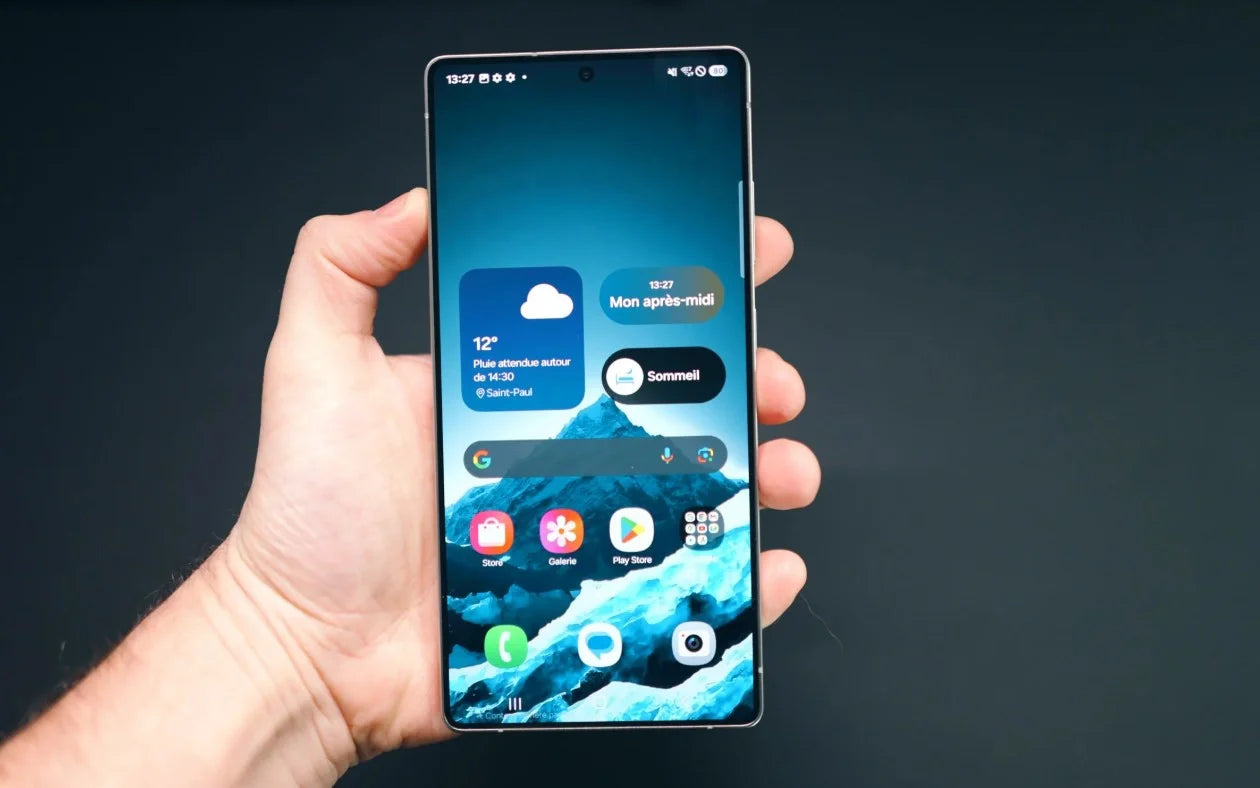
The Galaxy S26 Ultra hit shelves on March 11, 2026. Samsung's community immediately pivoted to the next question: what is the Galaxy S27 Ultra going to fix? Early leaks from the industry's most accurate tipsters — IceUniverse and Digital Chat Station — are already shaping a compelling picture of Samsung's 2027 flagship. This is the definitive tracker for every confirmed fact, credible leak, and grounded estimate about the Samsung Galaxy S27 Ultra. Every claim is labeled by confidence level. Updated as new intelligence emerges.
1. Release Date & Launch Timeline
Samsung has announced its Galaxy S flagship lineup in January or February for six consecutive years. The S21 launched in January 2021. The S22 through S26 all launched in late January or February of their respective years. There is no credible indication Samsung will break this pattern for the S27 generation.
✅ Confirmed — The Galaxy S26 Ultra was announced on February 25, 2026, and became available in stores on March 11, 2026. This gives us a precise baseline for S27 timing expectations.
⚪ Speculation — Samsung favors Wednesdays for Unpacked events. In February 2027, Wednesdays fall on February 3, 10, 17, and 24. Based on the S26's late-February announcement, February 17 or February 24, 2027 are the two most likely event dates. Retail availability would follow approximately 14 days later — targeting early March 2027.
Galaxy S26 Ultra available in stores — S27 cycle begins
Day one of the S27 Ultra's development cycle in the public eye. IceUniverse and Digital Chat Station begin publishing first-wave S27 intel within the same week as S26's launch.
Component sourcing and chip design finalization
Samsung locks in chip partners, camera sensor orders, and battery technology decisions. Custom Snapdragon 8 Elite Gen 6 Pro silicon design work is in progress at Samsung Foundry. No public leaks expected yet — Samsung's secure chat protocols are in effect.
Mass production begins — leak velocity accelerates
When manufacturing scales up, supply chain leaks become unavoidable despite Samsung's security measures. Expect the first hardware renders, regulatory certifications (FCC, BIS), and confirmed spec details to emerge October–December 2026. This is when this tracker gets significantly more detailed.
CES 2027 — Samsung teases without revealing
Samsung uses CES to build Unpacked anticipation. Reservation pages go live. Press briefings begin. Final spec sheet typically leaks within this window from media partners receiving early review units.
Galaxy Unpacked 2027 — Official S27 Ultra reveal
Expected announcement date. Galaxy S27, S27+, and S27 Ultra revealed simultaneously. Pre-orders open same day.
Galaxy S27 Ultra available in stores
Expected retail availability approximately 14 days after announcement. Samsung.com, major US carriers, and international retail markets.
2. Chipset — The Custom Snapdragon 8 Elite Gen 6 Pro
The chipset story for the S27 Ultra is where this generation gets genuinely interesting — and it goes beyond the typical annual Snapdragon refresh.
What "Custom" Actually Means
🔵 Credible Leak — Digital Chat Station, confirmed by GSMArena, reports that the Galaxy S27 Ultra will use a chip tentatively called the Snapdragon 8 Elite Gen 6 Pro. Critically, this is described not just as a clock-speed-tuned version of Qualcomm's standard Snapdragon — which is what Samsung has received for the past three generations — but as a chipset with deeper architectural customization developed in direct collaboration between Qualcomm and Samsung.
🔵 Credible Leak — GSMArena reports this chip will be manufactured on Samsung's 2nm GAA (Gate-All-Around) process node — a significant leap from the 3nm process used for the Snapdragon 8 Elite Gen 5 in the Galaxy S26 Ultra. The standard S27 and S27+ are expected to use Qualcomm's standard Snapdragon 8 Elite Gen 6 (not the Pro), or Samsung's own Exynos 2700, in a regional split.
🔬 Why 2nm GAA Process Matters
Moving from 3nm to 2nm is not merely a number change. Samsung's 2nm GAA (Gate-All-Around) node architecture fundamentally changes how transistors are constructed — using a nanosheet structure that provides better electrostatic control than the FinFET design used at 3nm. The practical results: higher transistor density in the same die area (enabling more CPU/GPU cores or larger cache), improved power efficiency at peak performance (less heat generated per computation), and better thermal consistency during sustained workloads. If Samsung's 2nm yield rates are competitive with TSMC's equivalent node — which Samsung has historically struggled with at new nodes — the S27 Ultra's custom chip could deliver a genuine generational leap rather than the incremental 10–20% improvements typical of annual Snapdragon refreshes.
Clock Speeds — Treat With Caution
🟡 Rumor — Multiple sources have cited leaked clock speed data suggesting the Snapdragon 8 Elite Gen 6 Pro could reach peak frequencies of 5.5–6.0 GHz, dramatically above the ~4.47 GHz peak of the Gen 5 in the S26 Ultra. These figures deserve heavy skepticism. Pre-launch performance claims are notoriously unreliable, and early test silicon often runs at higher clocks than final production chips. The actual performance improvement is likely real but the specific numbers will not be confirmed until independent benchmarks in early 2027.
NPU, GPU, and AI Processing
⚪ Speculation — The S26 Ultra's Snapdragon 8 Elite Gen 5 delivered a 39% NPU improvement over the Gen 4 (per Samsung's own claims). If the custom 2nm chip maintains a similar improvement trajectory, the S27 Ultra's NPU performance would represent a roughly 50–80% improvement over the S25 Ultra's chip. This has direct implications for Galaxy AI features: faster on-device computation, more complex real-time AI processing, and reduced reliance on cloud compute for privacy-sensitive tasks.
🟡 Rumor — Top configurations of the S27 Ultra may ship with 16GB LPDDR6 RAM, up from the 12–16GB LPDDR5X split seen in the S26 Ultra. LPDDR6 offers higher bandwidth and lower power consumption, directly benefiting both AI processing and multitasking performance.
Apple's competitive advantage in performance-per-watt comes almost entirely from its proprietary chip design — the A-series. Qualcomm makes excellent processors, but they're designed for multiple OEM customers simultaneously. A chip designed specifically for Samsung's camera pipeline, display processor, and AI stack would be meaningfully more efficient at Samsung-specific tasks. For the S27 Ultra, this could translate to faster camera shutter-to-save times, more responsive Horizon Lock video stabilization, and Galaxy AI features that feel instantaneous rather than processing-delayed. This is the first meaningful step Samsung has taken toward Apple-level silicon differentiation.
3. Camera System — The Biggest Ultra Upgrade in Three Years
Samsung's camera hardware has been the most consistent point of reviewer criticism for three consecutive Ultra generations. The S24 Ultra recycled the S23 Ultra's main sensor. The S25 Ultra recycled it again. The S26 Ultra finally added a wider f/1.4 aperture on the main lens — a meaningful but modest improvement. The S27 Ultra is generating genuine camera excitement for the first time since the S23 Ultra introduced 200MP, because credible sources indicate Samsung is finally committing to real hardware changes.
Main Sensor — ISOCELL HPA or HP6
🔵 Credible Leak — Digital Chat Station reports Samsung has developed a new sensor called the ISOCELL HPA, sized at 1/1.12 inches. To put this in context: the Galaxy S25 Ultra and S26 Ultra both used a 200MP sensor at 1/1.3-inch — a size that Samsung has reused for multiple generations. A jump from 1/1.3-inch to 1/1.12-inch represents the first meaningful sensor size increase for the Ultra's main camera in years. A larger sensor physically captures more photons per pixel, translating to improved low-light images, higher dynamic range, and more natural bokeh.
🔵 Credible Leak — IceUniverse, who has called Samsung camera specs with near-perfect accuracy, adds important nuance: Samsung may use a modified version of this sensor called the HP6, which maintains the 1/1.3-inch physical dimensions of the current sensor but incorporates the internal architecture improvements — particularly LOFIC — of the larger ISOCELL HPA. The HP6 designation would allow Samsung to achieve performance gains without the chassis redesign that a physically larger sensor might require.
🔵 LOFIC Technology — What It Actually Does
LOFIC (Lateral Overflow Integration Capacitor) is a sensor architecture that adds overflow capacitors to each pixel. In practice, this allows the sensor to capture a much wider range of luminosity in a single frame — preserving highlight detail that would otherwise blow out and shadow detail that would otherwise crush to black. Samsung's main camera weakness in every Ultra generation since S22 has been dynamic range in high-contrast scenes (bright sky with foreground subject, direct sunlight mixed with shadows). LOFIC is a targeted architectural solution to exactly this problem. If the S27 Ultra's sensor incorporates it, every high-contrast shot should look meaningfully better without any AI processing.
Three Camera Upgrades — A Comprehensive Refresh
🔵 Credible Leak — IceUniverse stated explicitly that Samsung plans to upgrade three cameras on the S27 Ultra: the main sensor, the ultrawide, and the front-facing camera. This is the most important camera leak for the S27 cycle. The S26 Ultra upgraded only the main aperture. The S25 Ultra only upgraded the ultrawide. A three-sensor refresh would be the most comprehensive camera hardware overhaul the Ultra series has received since the S23 Ultra introduced the 200MP main sensor in 2023.
| Camera | Galaxy S26 Ultra (Current) | Galaxy S27 Ultra (Expected) | Signal |
|---|---|---|---|
| Main sensor | 200MP, 1/1.3-inch, f/1.4 | 200MP, ISOCELL HP6/HPA, LOFIC, potentially larger sensor | 🔵 Credible Leak |
| Ultrawide | 50MP, 1/2.5-inch | Upgraded — specs unconfirmed | 🔵 Credible Leak |
| 3x telephoto | 10MP, 1/3.94-inch | Carry-forward or minor upgrade | ⚪ Speculation |
| 5x periscope | 50MP, 1/2.52-inch, f/2.9, ALoP | Possible aperture or optics improvement | 🟡 Rumor |
| Front camera | 12MP, f/2.2 | Upgraded — specs unconfirmed | 🔵 Credible Leak |
Video Capabilities
⚪ Speculation — The S27 Ultra is expected to maintain 8K video recording and the S26 Ultra's Horizon Lock stabilization feature. With the custom Snapdragon chip's more powerful image signal processor, real-time AI video processing features like the S26 Ultra's 4K autoframe and Enhanced Nightography Video should become more capable without increasing the computational overhead that causes thermal throttling during sustained recording.
Important context: All camera specifications above are based on early leaks, 10+ months before the S27 Ultra launch. Camera hardware is one of the last specifications confirmed in Samsung's development cycle — the final sensor choice, apertures, and optical design may change significantly. Use these as directional indicators, not confirmed specifications.
4. Battery — Silicon-Carbon Could Finally Fix Samsung's Biggest Weakness
The Galaxy S24 Ultra had a 5,000mAh battery. The S25 Ultra had a 5,000mAh battery. The S26 Ultra — despite Samsung shipping 60W wired charging for the first time — had a 5,000mAh battery. Every year, Samsung's Ultra battery capacity has remained flat while Chinese flagship competitors have shipped 6,500–7,500mAh. This is the most consistently criticized aspect of the Ultra series, and it may finally change with the S27.
Silicon-Carbon Battery Testing Confirmed by Leaked Report
🔵 Credible Leak — PhoneArena and Android Central both report on a leaked internal Samsung test document indicating the company is actively testing silicon-carbon battery cells for the S27 Ultra. Three cell configurations were reportedly tested: 12,000mAh, 18,000mAh, and 20,000mAh. These are cell-level capacities, not device battery capacities — the distinction matters because battery cells can be stacked or configured in various ways within a device chassis.
🔵 Credible Leak — The same leaked report specifies Samsung's design constraint: the battery must remain under 9.3mm thick. The 18,000mAh test cell reportedly measured 12.3mm — exceeding this constraint and making it unsuitable for the final device. This gives us useful engineering triangulation: a silicon-carbon battery that fits within Samsung's 9.3mm thickness target is realistically in the 5,500–7,000mAh range.
🔬 Silicon-Carbon Battery Technology Explained
Standard lithium-ion batteries use graphite anodes. Silicon can store approximately 10× more lithium ions per gram than graphite — meaning the same physical battery volume can hold dramatically more energy. Silicon-carbon anodes blend silicon particles with carbon materials to manage silicon's tendency to expand during charging (which causes cracking and degradation over charge cycles). Chinese manufacturers including Vivo, Xiaomi, and OPPO have deployed silicon-carbon batteries since 2023–2024. Samsung's testing of this technology for the S27 Ultra suggests the company has resolved enough of its yield and durability concerns to consider it for mass production. If deployed, a silicon-carbon battery in the S27 Ultra could deliver 5,500–7,000mAh in essentially the same physical package as the current 5,000mAh battery — a 10–40% capacity increase with no added bulk.
Charging Speed
🟡 Rumor — The S27 Ultra may push wired charging to 65W, a modest step up from the S26 Ultra's 60W. This would maintain Samsung's annual charging speed improvement trajectory: S24 Ultra (45W) → S26 Ultra (60W) → S27 Ultra (65W, rumored). Wireless charging is expected to maintain or improve on the S26 Ultra's 25W.
⚪ Speculation — Native Qi2 magnet integration remains unlikely for the S27 Ultra. Samsung explicitly stated the S26 Ultra lacked built-in magnets due to interference with the camera array and S Pen silo. Unless Samsung redesigns the device architecture significantly, this decision will likely persist. This means S27 Ultra owners will again need a MagSafe-compatible case to unlock the full Qi2 accessory ecosystem — exactly as S25 Ultra and S26 Ultra owners do today.
5. Polar ID — Samsung's Answer to Secure Face Authentication
🔵 Credible Leak — One of the most distinctive rumored features for the S27 Ultra is a new biometric authentication system called Polar ID. According to multiple leak aggregators including PhoneArena and IBTimes, Polar ID uses polarized light scanning to authenticate users through facial recognition.
How Polar ID Differs From Current Samsung Face Unlock
Current Samsung face unlock (on S24–S26 Ultra) uses 2D camera recognition — fast and convenient, but not cryptographically secure enough for banking authentication. Apple's Face ID uses an array of sensors (dot projector, infrared camera, flood illuminator) housed in the Dynamic Island/notch to map face geometry in 3D. Polar ID reportedly achieves similar depth-awareness through polarized light, which interacts differently with human skin versus a photograph or mask — providing true 3D facial mapping without the prominent notch Apple requires.
Known: Polarized light technology for face authentication. Compact hardware footprint — no large notch. Described as more secure than current 2D face unlock. Reported for S27 Ultra only (not S27/S27+ at launch).
Unknown: Whether the depth sensing can work in total darkness. Whether it can function with glasses, masks, or hats. The exact hardware components involved. Whether it will qualify for banking-level biometric authentication under Android/Knox security standards. Whether the ultrasonic in-screen fingerprint sensor will be retained alongside it.
🟡 Rumor — Polar ID is expected to work alongside the existing ultrasonic fingerprint sensor rather than replacing it — giving S27 Ultra users two secure authentication options. The fingerprint sensor would serve as the fallback for low-light, masked, or partial-face scenarios where Polar ID might struggle.
6. Display & Design
Display — Evolution, Not Revolution
⚪ Speculation — No specific display leaks have emerged for the S27 Ultra. Based on the trajectory of S24–S26 Ultra displays, the S27 Ultra is expected to retain a 6.9-inch Dynamic LTPO AMOLED 2X panel at QHD+ resolution (3120 × 1440) with 1–120Hz adaptive refresh rate and HDR10+ support.
🟡 Rumor — Peak brightness may increase beyond the S26 Ultra's 2,600 nits, driven by improvements in Samsung Display's manufacturing rather than architectural changes. Samsung Display, which supplies Samsung's own devices, typically reserves its most advanced panel technology for the Galaxy Ultra lineup. The S27 Ultra's custom Snapdragon chip will also have a more capable display processor, potentially enabling better adaptive refresh rate behavior at very low brightness levels.
Privacy Display — Carry Forward or Drop?
The S26 Ultra introduced Privacy Display as its flagship differentiating feature — a panel-level technology that narrows viewing angles to prevent shoulder-surfing. ⚪ Speculation — Privacy Display is expected to carry forward to the S27 Ultra as a retained feature rather than being discontinued. With Polar ID also being added for face authentication, the S27 Ultra would have two distinct "privacy-forward" technologies — one for the display, one for biometrics.
Design — The Frame Material Question
The S25 Ultra's titanium frame was praised universally by reviewers. The S26 Ultra's regression to aluminum was the single most-criticized hardware decision of the S26 cycle. ⚪ Speculation — No leaks have specifically addressed the S27 Ultra's frame material. Samsung's design teams will have heard the S26 Ultra aluminum criticism loud and clearly. A titanium return for the S27 Ultra would be an easy win — but Samsung's decision to use aluminum in the S26 Ultra was tied to a cost and weight management calculation that doesn't automatically reverse itself for the S27.
⚪ Speculation — The S27 Ultra will likely maintain the Gorilla Glass Armor 2 protection on both front and back — the highest tier of Samsung's glass lineup. The camera island layout introduced with the S26 Ultra, which unified the Ultra's design with the standard S26 models, is expected to continue.
7. S Pen — The Survival Question
The S Pen is the single feature that most clearly defines what the Ultra series is — and it's facing its most credible threat of removal since the S22 Ultra introduced it with a built-in silo.
The Removal Rumor
🟡 Rumor — Early 2026 reports suggested Samsung is internally debating whether to remove the S Pen entirely from the S27 Ultra. The technical argument: the S Pen silo occupies physical volume inside the device chassis that could otherwise accommodate a larger battery or additional components. With Samsung testing silicon-carbon batteries, the internal pressure on space allocation is real.
Why We Don't Believe It
Samsung faced similar S Pen removal rumors ahead of the S24 Ultra and S25 Ultra launches. Both times, Samsung kept the stylus. Both times, the rumors turned out to be either deliberate misdirection or analyst speculation rather than sourced intelligence.
🔵 Credible Leak — PhoneArena notes that these rumors "may turn out to be false" — careful language from a publication that takes its sourcing seriously. The S Pen is Samsung's most powerful competitive differentiator against both Apple's iPhone Pro Max (no stylus) and Samsung's own S27+ model. Removing it would eliminate the clearest reason to pay the Ultra premium.
🔴 The More Important S Pen Question: Will Bluetooth Return?
The S26 Ultra controversially removed Bluetooth from the S Pen — eliminating its function as a camera remote, Air Action controller, and presentation clicker. This was Samsung's most criticised individual feature decision in the S26 cycle. Restoring Bluetooth to the S27 Ultra's S Pen would require minimal added hardware volume, would immediately reverse the S26 Ultra's most-criticised regression, and would give Samsung a genuine "we listened" talking point at S27 Unpacked. No leaks have confirmed or denied this. We consider Bluetooth restoration to be the most likely S Pen change for S27 Ultra — but it remains unconfirmed.
8. Software — Android 17 and One UI 9.5
✅ Confirmed — Samsung has committed to 7 years of Android OS and security updates for Galaxy S Ultra series devices. The S27 Ultra, launched in 2027, would receive updates through approximately 2034.
⚪ Speculation — The S27 Ultra will launch with Android 17 and Samsung's One UI 9.5 (or possibly One UI 10 if Samsung accelerates its versioning cadence). Google typically releases major Android versions in October–November. Samsung integrates the latest Android into its One UI customization layer, targeting a launch-ready build for its February Unpacked event.
Galaxy AI — From Gimmick to Core Experience
The S26 Ultra's Galaxy AI was broadly well-received in specific areas (Photo Assist, Automated App Actions) but criticized as "gimmicky" in others (screenshot sorting, Now Brief's imprecise personalization). The S27 Ultra, with its custom chip's dramatically improved NPU, is positioned to make Galaxy AI feel native rather than bolted-on.
🟡 Rumor — Specific Galaxy AI improvements rumored for the S27 generation include: Photo Assist 2.0 with more sophisticated generative editing and local processing (no cloud upload required), expanded Automated App Actions capable of multi-step tasks across more applications, and enhanced Now Brief with tighter calendar and health data integration. The custom NPU also enables better real-time AI during video recording — expect more capable Horizon Lock, improved Audio Eraser, and lower-latency AI zoom for the 5x periscope camera.
🟡 Rumor — IBTimes sources mention a potential Bixby overhaul for the S27 generation. Samsung's voice assistant has lagged behind Google Gemini and Apple's Siri for years. A Galaxy AI-powered Bixby relaunch — with on-device processing for privacy-sensitive queries — would be a meaningful differentiator if Samsung can execute it.
9. Price Estimates — What Will the S27 Ultra Cost?
✅ Confirmed — Samsung has made no official statements about Galaxy S27 Ultra pricing. Any numbers in this section are analyst estimates and pattern-based speculation.
Samsung has maintained the Ultra's starting price at $1,299.99 for three consecutive generations: S24 Ultra, S25 Ultra, and S26 Ultra all launched at this price point for the 256GB base model. The S27 Ultra introduces two components that add manufacturing cost: a custom Snapdragon chip (higher per-unit cost than a standard Qualcomm supply deal) and potentially a silicon-carbon battery (currently more expensive per kWh than standard lithium-ion).
| Galaxy S27 Ultra Config | Estimated Price | vs S26 Ultra |
|---|---|---|
| 256GB / 12GB RAM (base) | ~$1,299–$1,399 | Same or +$100 |
| 512GB / 16GB RAM | ~$1,499–$1,599 | +$0–$100 vs S26 512GB ($1,499) |
| 1TB / 16GB RAM | ~$1,659–$1,799 | +$0–$140 vs S26 1TB ($1,659) |
⚪ Speculation — Samsung's historical pattern suggests it will absorb component cost increases at the base tier to maintain the $1,299 entry price — and shift higher costs into the 512GB and 1TB configurations. This allows Samsung to advertise competitive pricing ("same starting price as S26 Ultra") while recovering margin on premium storage purchases, which are disproportionately chosen by serious Ultra buyers.
⚪ Speculation — Samsung is expected to offer generous pre-order trade-in incentives, as it has for the past four generations. Eligible Galaxy S24 and S25 Ultra trade-ins could reduce out-of-pocket cost to $499–$699 through Samsung direct or carrier promotions.
10. Galaxy S27 Ultra vs Galaxy S26 Ultra — Complete Comparison
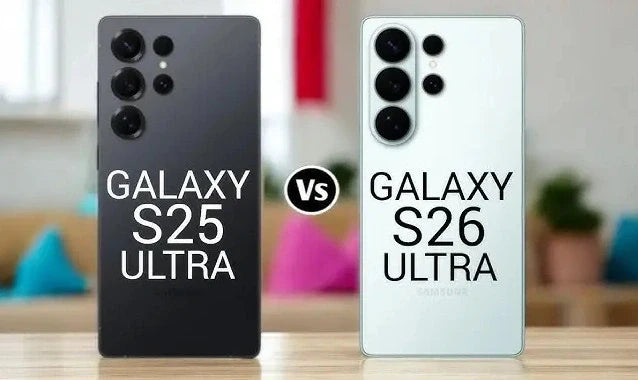
The S26 Ultra was well-reviewed but broadly considered the most incremental Ultra upgrade since the S22 Ultra. Samsung played it safe. The S27 leaks suggest Samsung won't play it safe again. Here's how the two devices compare based on everything currently known.
| Specification | Galaxy S26 Ultra | Galaxy S27 Ultra (Expected) | Verdict |
|---|---|---|---|
| Chipset | Snapdragon 8 Elite Gen 5 (3nm) | Custom Snapdragon 8 Elite Gen 6 Pro (2nm) | ↑↑ Major |
| Manufacturing node | 3nm | 2nm GAA | ↑↑ Significant |
| RAM | 12GB / 16GB LPDDR5X | 16GB LPDDR6 (est.) | ↑ Incremental |
| Storage | 256GB / 512GB / 1TB UFS 4.0 | 256GB / 512GB / 1TB UFS 5.0 (est.) | ↑ Minor |
| Main camera sensor | 200MP, 1/1.3-inch, f/1.4 | 200MP, ISOCELL HP6/HPA, LOFIC | ↑↑ Major (if confirmed) |
| Ultrawide camera | 50MP | Upgraded (details unknown) | ↑ Expected |
| Front camera | 12MP | Upgraded (details unknown) | ↑ Expected |
| Battery capacity | 5,000mAh | 5,500–7,000mAh silicon-carbon (est.) | ↑↑ Potentially Major |
| Wired charging | 60W | ~65W (rumored) | ↑ Minor |
| Wireless charging | 25W (Qi2.2, no magnets) | 25W+ (no magnets likely) | ≈ Similar |
| Face authentication | 2D camera face unlock | Polar ID polarized light (rumored) | ↑↑ Major (if confirmed) |
| Frame material | Aluminum | Unknown — titanium return possible | ? TBD |
| Display size | 6.9" QHD+ 120Hz | ~6.9" (unchanged likely) | ≈ Same |
| Privacy Display | ✓ Included | Likely retained | ≈ Same |
| S Pen | Included (no Bluetooth) | Likely included; BT restoration possible | ≈ Same or better |
| Built-in Qi2 magnets | No | Unlikely | ≈ Same (needs case) |
| OS at launch | Android 16 / One UI 8.5 | Android 17 / One UI 9.5 | ↑ New software |
| Expected starting price | $1,299.99 | ~$1,299–$1,399 | ≈ Similar |
Summary verdict: If even half of the rumored S27 Ultra upgrades materialize, it represents a meaningfully stronger generational upgrade than the S26 Ultra was over its predecessor. The chipset node change (3nm → 2nm custom), the camera sensor overhaul, and the silicon-carbon battery are all hardware improvements that the S26 cycle couldn't claim. S26 Ultra owners who feel underwhelmed by their purchase won't feel that way about the S27 — but they'll wait 11+ months to find out.
11. Ultra Generations at a Glance — S23 Through S27
Putting the S27 Ultra into the full context of its lineage makes the upgrade picture clearer. Here's how each Ultra generation advanced over its predecessor on key hardware dimensions.
| Model | Year | Key New Feature | Chipset | Battery | Main Cam |
|---|---|---|---|---|---|
| S23 Ultra | 2023 | 200MP main sensor; S Pen redesign | SD 8 Gen 2 | 5,000mAh | 200MP, 1/1.3" |
| S24 Ultra | 2024 | Titanium frame; flat display; Galaxy AI | SD 8 Gen 3 | 5,000mAh | 200MP, 1/1.3" (same) |
| S25 Ultra | 2025 | Gorilla Armor 2 front+back; rounded corners; lighter | SD 8 Elite Gen 4 | 5,000mAh | 200MP, 1/1.3" (same) |
| S26 Ultra | 2026 | Privacy Display; f/1.4 aperture; 60W charging | SD 8 Elite Gen 5 | 5,000mAh | 200MP, 1/1.3", f/1.4 |
| S27 Ultra | 2027 (exp.) | Custom chip; Si–C battery; Polar ID; 3 cam upgrade | Custom SD 8 Elite Gen 6 Pro (2nm) | 5,500–7,000mAh (est.) | 200MP, LOFIC, larger sensor |
The pattern is clear: the S27 Ultra is positioned to deliver hardware advances that the S24, S25, and S26 Ultra cycles deferred. Four years without a meaningful battery increase ends here (if the silicon-carbon rumors are accurate). Three years without a camera sensor architecture change ends here (if the LOFIC/HP6 leaks are accurate). One year after Apple's Face ID equivalent concept ends here (if Polar ID delivers). The S27 Ultra has more genuine upgrade catalysts than any Ultra since the S23 Ultra introduced 200MP.
12. Samsung's Anti-Leak Iron Curtain
Samsung's pre-launch intelligence situation for the S26 was commercially embarrassing — not in terms of sales (the Ultra sold out despite full spec leaks), but in terms of the company's ability to surprise its audience. IceUniverse and Digital Chat Station had essentially published the complete S26 Ultra spec sheet weeks before Samsung's Unpacked event. Samsung decided this wouldn't happen with the S27.
✅ Confirmed — Multiple outlets including IBTimes UK and Sammy Fans have confirmed Samsung has implemented a company-wide "secure chat" protocol targeting Galaxy S27 intelligence. The system prohibits copying, forwarding, saving, or screenshotting of internal messages. The mandate extends to manufacturing partners and suppliers — not just Samsung's own employees. The system was reportedly triggered not just by the S26 leaks but by Samsung's intelligence that tipsters like DCS have embedded supply-chain source relationships that can't be addressed through internal measures alone.
What this protocol means practically for S27 watchers:
Shorter leak window: The S26 cycle's most damaging leaks came from supply chain sources in October–January — nearly six months before launch. The secure chat system may compress this to two to three months of meaningful hardware leaks in late 2026. More expensive intelligence: Sources who do leak will take greater personal risk, making their information more selective and potentially more reliable — leakers who risk much tend to have specific, high-confidence information rather than speculative chains. Later render leaks: CAD files and marketing renders, which typically surface 8–10 weeks before announcement, may arrive closer to 4–6 weeks before due to tighter NDA enforcement with manufacturing partners.
Samsung's iron curtain won't stop all leaks — it never has. IceUniverse and DCS have already published credible S27 intelligence despite Samsung's clampdown. The source relationships these leakers maintain are not primarily based on electronic message interception. But it does mean this tracker will be meaningfully less complete in mid-2026 than it becomes in October–December 2026 as production scales and physical hardware reaches more hands.
13. The Leakers — Who to Trust for S27 Ultra Intel
14. The S27 Ultra Wishlist — What Samsung Needs to Deliver
Beyond the leaked features, here's what the Samsung enthusiast community and professional reviewers most want to see from the S27 Ultra. These are editorial opinions — not sourced claims.
15. Should You Wait for the Galaxy S27 Ultra or Buy the S26 Ultra Now?
This is the question most people reading this article actually want answered. The S27 Ultra is approximately 11 months away. The Galaxy S26 Ultra is available now at $1,299.99. Here's the honest answer based on what we currently know.
⏳ Consider Waiting If You...
- Currently own a Galaxy S25 Ultra or S26 Ultra (no urgent upgrade)
- Primarily care about battery life (S26 Ultra is 5,000mAh; S27 may hit 7,000mAh)
- Use the S Pen Bluetooth functions that S26 removed
- Are specifically bothered by the S26 Ultra's aluminum frame
- Already have a Galaxy S24 Ultra and aren't suffering major pain points
- Want Polar ID's more secure facial authentication
✓ Buy the S26 Ultra Now If You...
- Own a Galaxy S23 Ultra or older (S26 is a comprehensive upgrade)
- Are on an Android phone that isn't Samsung Ultra tier
- Need 60W wired charging, Privacy Display, or the f/1.4 aperture now
- Don't want to spend 11+ months with an inferior device
- Can get a strong trade-in deal ($700–$900 off at carriers)
- Are broadly satisfied with 5,000mAh battery performance
💡 The Honest Math — S26 Ultra vs S27 Ultra Wait Decision
The Galaxy S26 Ultra costs $1,299.99. The S27 Ultra will cost approximately the same or slightly more. Waiting 11 months for the S27 Ultra means 11 months with your current, inferior device. At Samsung's typical resale trajectory, a used S26 Ultra in 2027 will be worth approximately $700–$800 — meaning you lose $500–$600 in device value over that period.
The decision calculus: if battery life is your #1 pain point with the S26 Ultra and the silicon-carbon battery delivers 7,000mAh, waiting may be worth the depreciation cost. For most other use cases, buying the S26 Ultra now and trading up to the S27 Ultra with a carrier promotion in 2027 is the stronger financial move — you get the better device now and a subsidized upgrade later.
16. Protect Your Current Galaxy — S27 Cases Don't Exist Yet
The Galaxy S27 Ultra won't ship until March 2027. If you're reading this in 2026, your current Galaxy — whether it's the S26 Ultra, S25 Ultra, S24 Ultra, or Z TriFold — needs protection right now.
OdinCase is a Galaxy-exclusive store. Every case in the collection is engineered specifically for Samsung's flagship devices. Not adapted from generic templates. Not cross-branded with iPhone sizing. Precision-cut for the S Pen silo, the exact camera island geometry, and the specific frame tolerances of each device we carry. Free worldwide shipping, insured and tracked, on every order. 10,000+ Galaxy owners served.
🔒 Galaxy-Exclusive Cases — Every Current Samsung Flagship
S27 Ultra cases don't exist yet. Your current Galaxy needs protection today — and a case specifically engineered for its S Pen silo, camera island, and frame dimensions. No Qi2 magnets built into your Galaxy? Our MagSafe cases fix that. Free worldwide shipping on every order.
17. Frequently Asked Questions — Galaxy S27 Ultra
📱 Your Galaxy Needs Protection Now — Not in 2027
OdinCase is the Samsung-exclusive store trusted by 10,000+ Galaxy owners. Precision-engineered cases for every current flagship: S26 Ultra, S25 Ultra, S24 Ultra, Z TriFold, Z Fold 7. Free worldwide shipping, fully insured and tracked. No generic templates — every case is built for Samsung's exact dimensions, S Pen silo, and camera island geometry.

Leave a comment
This site is protected by hCaptcha and the hCaptcha Privacy Policy and Terms of Service apply.