
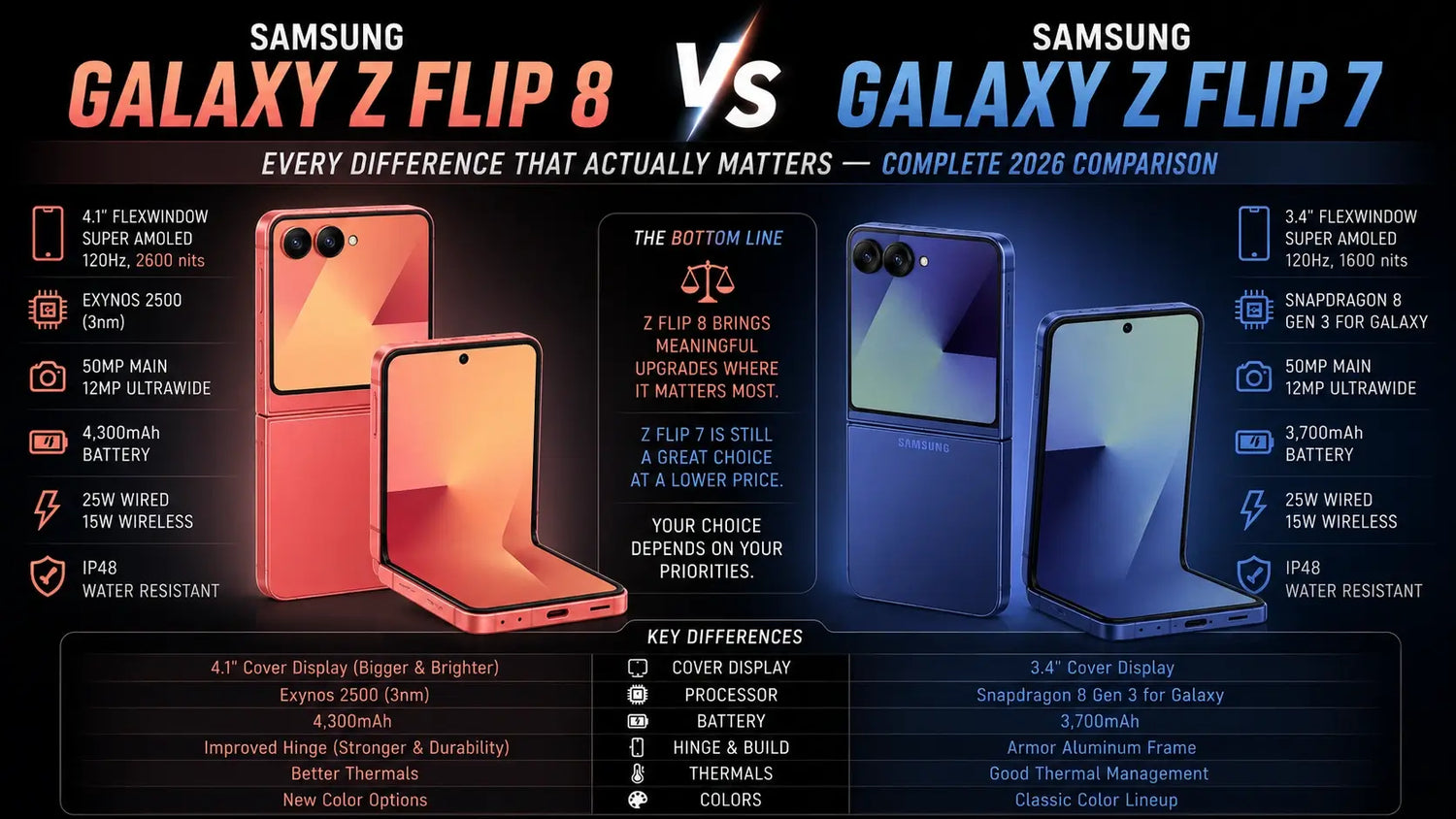
⚠️ Pre-release guide. The Galaxy Z Flip 8 has not been officially announced as of May 16, 2026. Every Z Flip 8 spec is from credible leaks. Labels mark confidence level. Final specs confirmed at Galaxy Unpacked London, July 22, 2026.
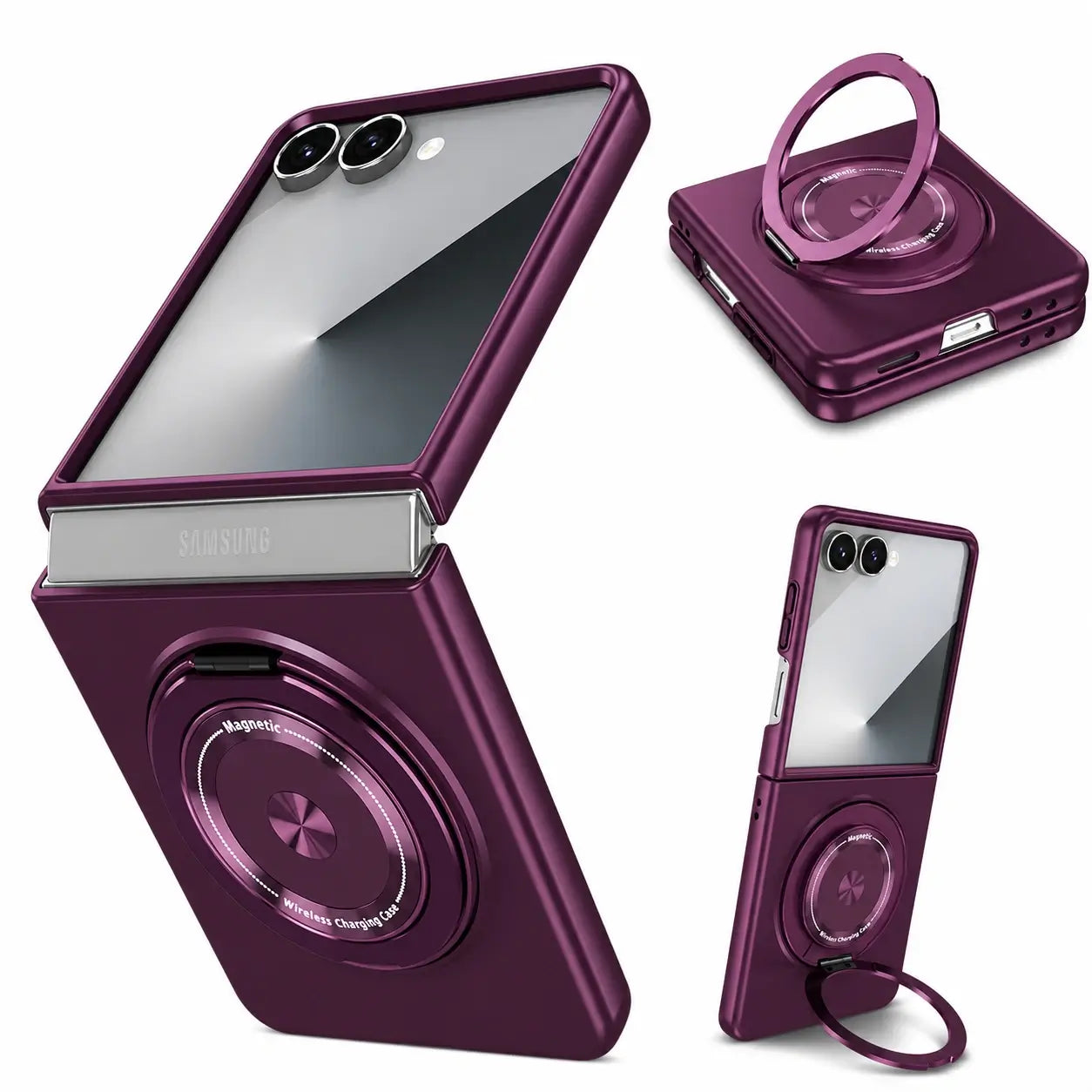
OdinCase is the only online store in the world that specializes exclusively in Samsung Galaxy cases and accessories — covering every Z Flip generation from Z Flip 3 through Z Flip 7 today, and Z Flip 8 cases ready on launch day July 22, 2026. Whether you upgrade or keep your Z Flip 7, OdinCase has you covered.

Side-by-Side: Z Flip 8 vs Z Flip 7 vs Z Flip 8 FE — All Known Specs
| Specification | Z Flip 8 (2026) | Z Flip 7 (2025) | Z Flip 8 FE (est.) |
|---|---|---|---|
| Launch date | ~July 22, 2026 🔵 | July 9, 2025 ✅ | ~July 22, 2026 🟡 |
| Starting price (US) | ~$1,099 🔵 | $1,099 ✅ | ~$799–$899 🟡 |
| Chipset | Exynos 2600 (2nm) 🔵 ↑ NODE | Exynos 2500 (3nm) ✅ | Exynos 2500 (3nm) 🟡 |
| RAM | 12GB 🔵 | 12GB ✅ | 8GB 🟡 |
| Storage | 256 / 512GB 🔵 | 256 / 512GB ✅ | 256GB 🟡 |
| Folded thickness | 13.2mm 🔵 ↓ 0.5mm | 13.7mm ✅ | ~13.7mm 🟡 |
| Unfolded thickness | 6.6mm 🔵 | 6.9mm (official) / 6.9mm ✅ | ~6.9mm 🟡 |
| Weight | ~180g 🟡 ↓ ~8g | 188g ✅ | ~188g 🟡 |
| Inner display | 6.9-inch AMOLED 2x 🔵 | 6.9-inch AMOLED 2x ✅ | 6.7-inch 🟡 |
| Cover FlexWindow | 4.1-inch 🔵 | 4.1-inch ✅ | 3.4-inch 🟡 |
| Refresh rate | 120Hz 🔵 | 120Hz ✅ | 120Hz 🟡 |
| Display crease | Near-crease-free 🔵 IMPROVED | Minimal crease ✅ | Standard UTG 🟡 |
| Main camera | 50MP 🔵 | 50MP ✅ | 50MP 🟡 |
| Ultrawide camera | 12MP 🔵 | 12MP ✅ | 12MP 🟡 |
| Telephoto | None 🔵 | None ✅ | None 🟡 |
| Battery capacity | 4,300mAh 🔵 | 4,300mAh ✅ | 4,000mAh est. 🟡 |
| Battery cells | 1,150 + 3,024mAh 🔵 | 1,189 + 2,985mAh ✅ | — |
| Wired charging | 25W 🔵 | 25W ✅ | 25W 🟡 |
| Wireless charging | 15W Qi2.2 🔵 ↑ | 15W Qi2 ✅ | 15W Qi2 🟡 |
| Water resistance | IP48 🔵 | IP48 ✅ | IP48 🟡 |
| Privacy Display | Yes — new 🔵 NEW | No | Likely No 🟡 |
| Foreign Material Detection | Yes — new 🔵 NEW | No | Likely No 🟡 |
| OS at launch | Android 17 / One UI 9 🔵 | Android 16 / One UI 8 ✅ | Android 17 / One UI 9 🟡 |
| Software support | 7 years ✅ | 7 years ✅ | 7 years ✅ |
| Wi-Fi | Wi-Fi 7 🔵 | Wi-Fi 6E ✅ | Wi-Fi 7 🟡 |
| Bluetooth | 6.0 🔵 | 5.3 ✅ | 5.3 🟡 |
✅ Confirmed 🔵 Credible Leak 🟡 Rumor/Prediction · Z Flip 8 FE specs are pattern-based estimates — no specific FE leaks confirmed as of May 16, 2026.
Every Meaningful Difference — Ranked by Daily Impact
The Galaxy Z Flip 7 was the first Z Flip to use Samsung's own Exynos chipset — a switch from the Snapdragon chips used across the previous Z Flip series. The Exynos 2500 performed well in real-world conditions (PhoneArena found it "held up quite well in everyday use"), but it ran warmer under sustained load than Snapdragon equivalents, and AI task efficiency left room for improvement.
The Z Flip 8 moves to Exynos 2600 — built on Samsung's 2nm process (down from 3nm in the Exynos 2500). The 2nm node is a meaningful efficiency advance: the same chip powering international Galaxy S26 and S26+ models. The 10-core CPU features a 1+3+6 architecture with a C1-Ultra core clocked at 3.8GHz, three C1-Pro cores at 3.25GHz, and six efficiency cores. The Xclipse 960 GPU handles graphics. PhoneArena reports Exynos 2600 performs "close to the Snapdragon chip in most benchmarks" — and it's the chip in the S26, so the baseline is known.
Tech Advisor adds an interesting angle: a South Korean report suggests Samsung may have co-developed a custom Snapdragon 8 Elite Gen 5 for Galaxy variant on its own 2nm process — meaning the Z Flip 8 could use a hybrid Qualcomm-architecture, Samsung-fabricated chip. 🟡 This remains unconfirmed. The most likely outcome is standard Exynos 2600.
Daily impact: The 2nm efficiency gain means the Z Flip 8 should run cooler, handle AI features better, and squeeze more battery life out of the same 4,300mAh cell than the Z Flip 7 could. You won't notice raw performance — both chips handle anything a Z Flip owner does without hesitation. You will notice thermal comfort during extended use and slightly better end-of-day battery levels.
⬆️ MEANINGFUL UPGRADE — Best felt in AI task efficiency, sustained load thermal comfort, and effective battery life despite same mAhThe Galaxy Z Flip 8's most physically tangible change is confirmed by the OnLeaks CAD renders published April 10, 2026: it folds to 13.2mm — 0.5mm thinner than the Z Flip 7's 13.7mm. This is also the thinnest any mainstream Z Flip has been when folded. Paired with a rumored weight reduction to approximately 180g (from 188g), the Z Flip 8 is the most pocketable Flip in the series history. 🟡
Context on the 0.5mm: placed in isolation, half a millimeter sounds negligible. But the Z Flip series has been iterating toward ever-thinner folded profiles as its primary physical design goal — and the reduction here is achieved through a hinge redesign rather than simply shaving materials. A new hinge mechanism targets 10% thinner-than-Z Flip 7 performance, which delivers both the thickness reduction and tighter, cleaner hinge closure that also contributes to the crease reduction.
The weight reduction (~8g) is the other physical change you notice daily. The Z Flip 7 at 188g was already among the lightest full-feature foldables. A Z Flip 8 at approximately 180g would make it genuinely comparable to premium non-folding flagships in hand feel. For a device many users carry in a jacket breast pocket or a small bag, 8 fewer grams is felt across a full day.
The overall footprint (height × width unfolded) is functionally identical to the Z Flip 7 — OnLeaks confirmed matching dimensions. You would not identify the Z Flip 8 as a different product from a Z Flip 7 at a glance.
⬆️ MEANINGFUL UPGRADE — 0.5mm thinner and ~8g lighter: best physical improvement in pocketability since the Z Flip 7's FlexWindow expansionMultiple credible sources — SamMobile, AndroidHeadlines, and PhoneArena — report a "crease-free design structure" for the Z Flip 8's inner display. This aligns with Samsung Display's CES 2026 showcase where a new foldable OLED panel with dramatically reduced crease visibility was demonstrated. The technology uses improved UTG (Ultra Thin Glass) combined with structural changes to the hinge mechanism to reduce how deeply the glass deforms at the fold line.
The Z Flip 7's crease was already the best of any Z Flip — meaningfully better than the Z Flip 6. The Z Flip 8 appears to be taking the next step toward a fold line that is genuinely imperceptible during normal display use. Whether it reaches true invisibility is a question only hands-on testing at Unpacked will answer definitively.
The new hinge mechanism that delivers the 0.5mm thickness reduction is the same engineering change that reduces the crease. A tighter, more precise hinge fold means the display material deforms over a wider radius — distributing the stress that creates the crease over a greater area, making it shallower and less visible. These two improvements (thinness + crease) are the same engineering advance viewed from two different angles.
⬆️ MAJOR DISPLAY IMPROVEMENT — The crease has been the flip phone's most persistent visual flaw. If the Z Flip 8 delivers near-crease-free in practice, this is transformative for the format.Privacy Display is a new software-hardware feature for the Z Flip 8 that limits the inner display's viewing angle — making what's on screen invisible to people looking from the sides while remaining clearly visible to the user facing the display directly. This is particularly relevant for a clamshell foldable, where the large inner display is fully exposed to surrounding viewers in any unfolded use scenario — on public transport, in open-plan offices, or at cafes and restaurants.
The feature likely uses a polarisation or pixel-level technique to restrict light emission to a narrower forward angle. It would appear as a toggle in the display settings, allowing users to enable it when in public and disable it at home. For business users who work with sensitive documents, emails, and messages on their Z Flip 8 in public spaces, Privacy Display provides a meaningful daily use advantage that no current Z Flip offers.
The Z Flip 8's 6.9-inch inner display makes Privacy Display more useful here than on any current Z Flip: the larger the display, the more visible it is from a wider angle, and the more valuable angle restriction becomes.
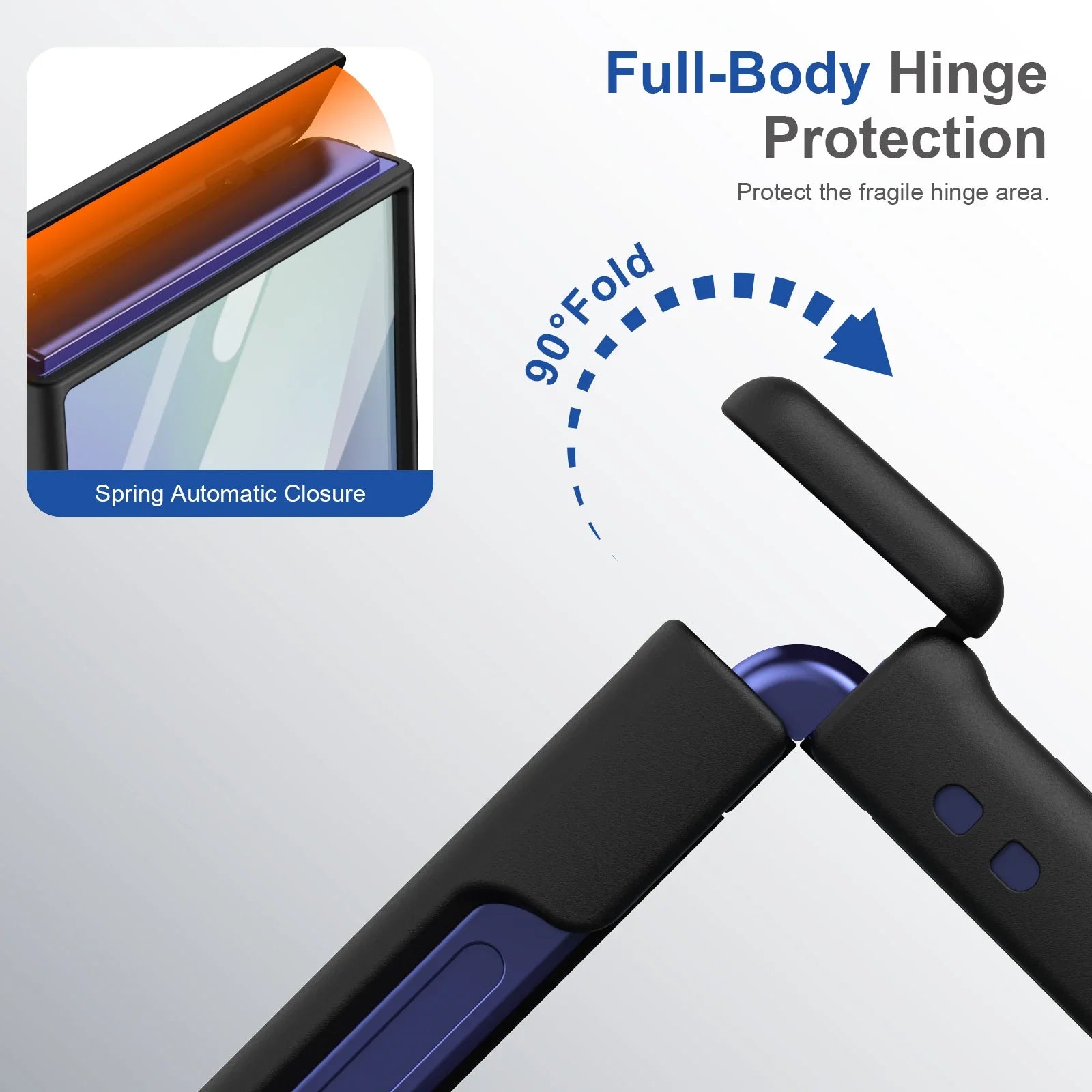
🔵 NOTABLE NEW FEATURE — Practical daily value for business users and anyone who handles sensitive content in public. First in the Z Flip line.Foreign Material Detection is a new One UI 9 software feature that uses the Z Flip 8's sensors to detect when debris — sand particles, pocket lint, grit — has become trapped between the display panels or in the hinge gap, and alerts the user before damage can occur. The hinge gap is the Z Flip's primary debris vulnerability: particles that enter during folded carry are dragged across the inner display surface with each open cycle, creating micro-scratches that accumulate over time.
The feature won't prevent debris from entering in the first place — a case with hinge coverage remains the most effective prevention. But for Z Flip owners who've experienced debris-related inner display damage without any warning system, the ability to be alerted before opening the phone on top of a grain of sand is a genuine protection improvement over no detection at all.
🔵 SMART PROTECTION FEATURE — Most appreciated by Z Flip owners who've experienced debris damage. Won't change your buying decision but will be valued daily.This is the most disappointing confirmed aspect of the Z Flip 8 — and it needs to be stated clearly. The Galaxy Z Flip 6 launched in 2024 with a 50MP main camera and a 12MP ultrawide. The Z Flip 7 launched in 2025 with the same 50MP + 12MP system. The Z Flip 8 launches in 2026 with the same 50MP + 12MP system. That is three consecutive years of identical camera hardware across three generations — SammyFans, Android Police, and PhoneArena have all independently confirmed the camera model numbers remain unchanged.
No telephoto lens is expected. The 50MP main sensor is the same component used in the Z Flip 6 and 7 — Samsung is not sourcing a new module. The 12MP ultrawide is equally unchanged.
Samsung's stated position on camera hardware is that the 50MP system is "already pretty decent" and that improvements are being delivered through software — ProVisual Engine updates, Enhanced Nightography, and AI photo processing via Galaxy AI. The Z Flip 8's Exynos 2600 chip does bring improved AI compute performance, which means software-driven camera improvements (particularly in night mode and computational sharpening) should be real even without new sensors.
The honest verdict: if you bought a Z Flip 7 primarily for its camera and were hoping the Z Flip 8 would bring meaningful sensor upgrades, you'll be disappointed. The camera story for the Z Flip 8 is entirely a software one — not a hardware one. Tech Advisor described the lack of camera and charging improvement as Samsung "resting on its laurels."
⚠️ ZERO HARDWARE UPGRADE — The Z Flip 8's clearest weakness relative to expectations. Software improvements are real but sensor-level improvement is not coming in this generation.📸 The Camera Situation — Honest Perspective
The Z Flip is positioned as a fashion and lifestyle foldable, not a camera powerhouse. Samsung's Galaxy S series handles the imaging leadership; the Z Flip carries the compact-luxury flag. Three years at 50MP + 12MP is frustrating, but it's consistent with Samsung's positioning for the format. If camera quality is your primary purchase driver, the Galaxy S26 Ultra (200MP main, 50MP ultrawide, 10MP telephoto) is the correct Samsung flagship — not the Z Flip 8.
The Z Flip 8's battery situation is one of the most nuanced aspects of this comparison. On headline specs, it's identical: 4,300mAh, 25W wired, and wireless charging. But two things are different in the details.
First, GalaxyClub confirmed via FCC filings that the Z Flip 8 uses a different cell split: 1,150mAh + 3,024mAh versus the Z Flip 7's 1,189mAh + 2,985mAh. The total is the same but the balance shifts slightly — the larger cell (3,024mAh vs 2,985mAh) may allow for slightly more consistent discharge characteristics in the main battery compartment, potentially affecting longevity curves over the device's life. Tech Advisor notes this is "unlikely to lead to any massive uptick in longevity" but may represent Samsung's optimization of battery chemistry.
Second — and more importantly — the Exynos 2600's 2nm efficiency means the Z Flip 8 should do more with the same 4,300mAh than the Z Flip 7 could. Samsung demonstrated this principle with the S26 series (same mAh as S25, but materially better battery life through chip efficiency). The Z Flip 8 should deliver a similar improvement: same cell, better on-time because the processor requires less power for equivalent workloads.
The wireless charging standard upgrades from Qi2 to Qi2.2 — a minor revision. Wired charging at 25W is unchanged. Tech Advisor correctly flagged this as Samsung "resting on its laurels" — the Galaxy A57 (a fraction of the Z Flip's price) charges at 45W. For a $1,099 foldable in 2026, 25W wired feels dated.
🟡 MIXED — Same mAh and wired charging speed disappoints; 2nm efficiency improvement should deliver real extra on-time; Qi2.2 wireless is a minor step forwardThe Z Flip 8 launches with Android 17 and One UI 9 — bringing the Galaxy AI improvements introduced with the Galaxy S26 series to the foldable: upgraded Now Bar, natural-language Bixby, enhanced Photo Assist, and improved AI writing tools. The Z Flip 7 will receive Android 17 via update during 2026, so the OS difference is temporary.
Wi-Fi 7 (vs Wi-Fi 6E on the Z Flip 7) provides meaningfully higher throughput in congested multi-device environments — relevant for Z Flip owners who use the device for video calls, media streaming, or heavy data transfer in busy locations. Bluetooth 6.0 brings improved audio quality and connection reliability for wireless earbuds and accessories.
🔵 WORTHWHILE — Galaxy AI improvements are real quality-of-life additions. Wi-Fi 7 and Bluetooth 6.0 future-proof the connectivity stack for the Z Flip 8's 7-year support window.What the Z Flip 8 Does NOT Change — And What That Means
Display Sizes — 6.9" Inner + 4.1" FlexWindow (Same)
The Z Flip 7 made the critical leap to a 6.9-inch inner display (from 6.7-inch) and a 4.1-inch FlexWindow cover screen (from 3.4-inch on the Z Flip 6). The Z Flip 8 retains both sizes. 🔵 This is correct — the Z Flip 7's display proportions are the best this format has offered, and there's no need to change them for the Z Flip 8. If you're upgrading from a Z Flip 6 or older, the 4.1-inch FlexWindow alone is a massive daily-use improvement you'll feel immediately.
IP48 Water Resistance (Same)
Both phones carry IP48 — resistance to particles 1mm and larger, water immersion to 1.5m for 30 minutes. It is not the IPX8 rating of standard flagships, and the hinge gap remains a debris entry concern in dusty environments. A case with hinge coverage is the practical solution. Android Central noted that with Google's Pixel 10 Pro Fold achieving IP68, the question of whether Samsung will push IP ratings higher for the Z Flip 8 remains open — but no leaks suggest it will. 🔵
Design Language (Same)
OnLeaks confirmed: the Z Flip 8 is visually indistinguishable from the Z Flip 7 at a glance. Same silhouette, same proportions, same corner radius, same button placement. If you love the Z Flip 7's aesthetic (and most owners do), you'll love the Z Flip 8's aesthetic equally. The thinness improvement is felt more than seen.
Software Support — 7 Years (Same)
Both Z Flip 7 and Z Flip 8 receive 7 years of OS and security updates from Samsung. The Z Flip 8 launches with Android 17 / One UI 9 and will be supported through approximately 2033. ✅
| Feature | Z Flip 8 FE (Est.) | Z Flip 8 | Z Flip 7 |
|---|---|---|---|
| Price | ~$799–$899 | ~$1,099 | $1,099 |
| Chipset | Exynos 2500 (3nm) | Exynos 2600 (2nm) | Exynos 2500 (3nm) |
| RAM | 8GB | 12GB | 12GB |
| Cover FlexWindow | 3.4-inch | 4.1-inch | 4.1-inch |
| Inner display | ~6.7-inch | 6.9-inch | 6.9-inch |
| Camera | 50MP + 12MP | 50MP + 12MP | 50MP + 12MP |
| Crease reduction | Standard UTG | Near crease-free | Standard UTG |
| Privacy Display | Likely No | Yes | No |
| Android / One UI | Android 17 / One UI 9 | Android 17 / One UI 9 | Android 16 / One UI 8 |
The Z Flip 8 FE formula (based on Z Flip 7 FE precedent): Previous-generation hardware (Z Flip 7's Exynos 2500 chip + Z Flip 6-era display), packaged with the current Android/One UI version, at a ~$200 lower price point. The critical trade-off is the cover screen: a 3.4-inch cover screen vs the Z Flip 8's 4.1-inch FlexWindow is a significant daily-use downgrade — the larger cover screen is the single most compelling reason to choose the flagship Z Flip over the FE tier. If the Z Flip 8 FE ships with a 3.4-inch cover, the $200 saving may not be worth the compromise for heavy cover-screen users.
Who Should Upgrade to the Z Flip 8 — and Who Should Not
- You own a Z Flip 5 or older — 2nm chip, crease improvement, thinner build, FlexWindow 4.1" are all meaningful jumps
- You own a Z Flip 6 — the Z Flip 8's near-crease-free display and Exynos 2600 efficiency are a 2-gen leap
- The display crease has consistently bothered you on every Flip you've owned
- Pocketability matters — the 0.5mm thickness and ~8g weight reduction are the most physically transformative changes the Z Flip format has seen in 2 years
- You want Privacy Display for business use or public spaces
- You're buying your first Z Flip and the Z Flip 8 launches before you need one
- You bought the Z Flip 7 in the last 12 months — the camera, battery mAh, and charging speed are unchanged
- Camera quality is your primary driver — identical 50MP + 12MP for the third year running
- The Z Flip 7's folded profile already fits your pockets — 0.5mm may not change your daily experience
- You're waiting to see the full lineup (Z Flip 8, Z Flip 8 FE, Motorola Razr comparison) before deciding
- The Z Flip 7's price is already dropping as July approaches — excellent value at a discount
- Budget is the primary constraint — ~$200 saving over the flagship Z Flip 8
- You don't heavily use the cover screen (3.4" FE vs 4.1" Z Flip 8)
- A first Z Flip experience at the most accessible 2026 price point
- Gifting a clamshell foldable without paying flagship pricing
- Caveat: The 3.4-inch cover screen is the biggest daily-use downgrade vs the 4.1-inch on the Z Flip 8 and Z Flip 7
Case Compatibility — Z Flip 7 Cases and Z Flip 8
⚠️ Z Flip 7 cases are likely incompatible with the Z Flip 8. While the overall footprint is very similar, the 0.5mm reduction in folded thickness and any changes to hinge and camera module positioning mean Z Flip 7 cases will not fit the Z Flip 8 correctly. The Z Flip 8 FE will also require its own separate cases — different from both the Z Flip 8 and Z Flip 7. OdinCase will have precision-fit collections for all three models available on launch day.
💡 The Case Investment at Z Flip 8 Launch
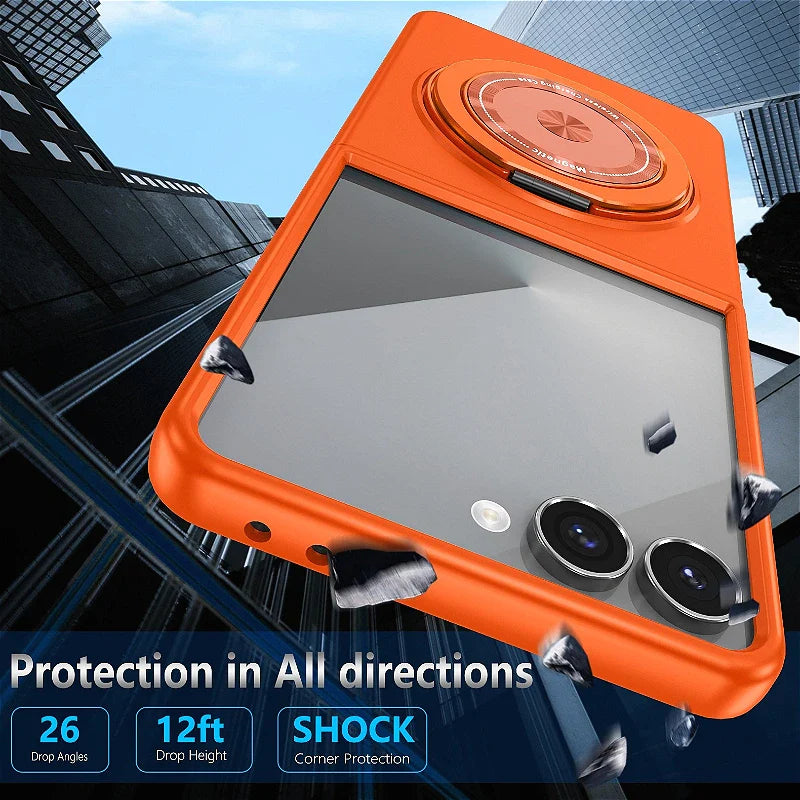
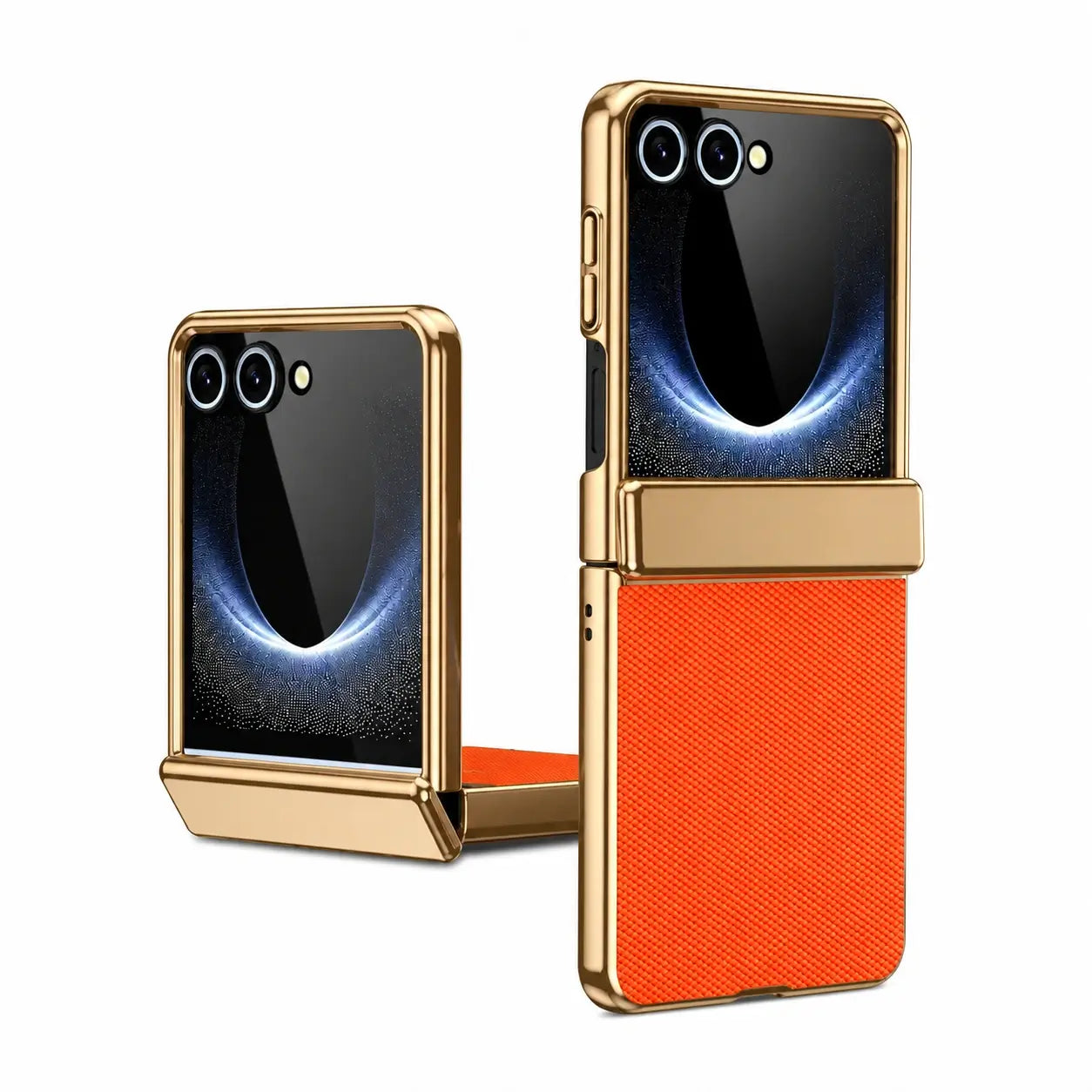
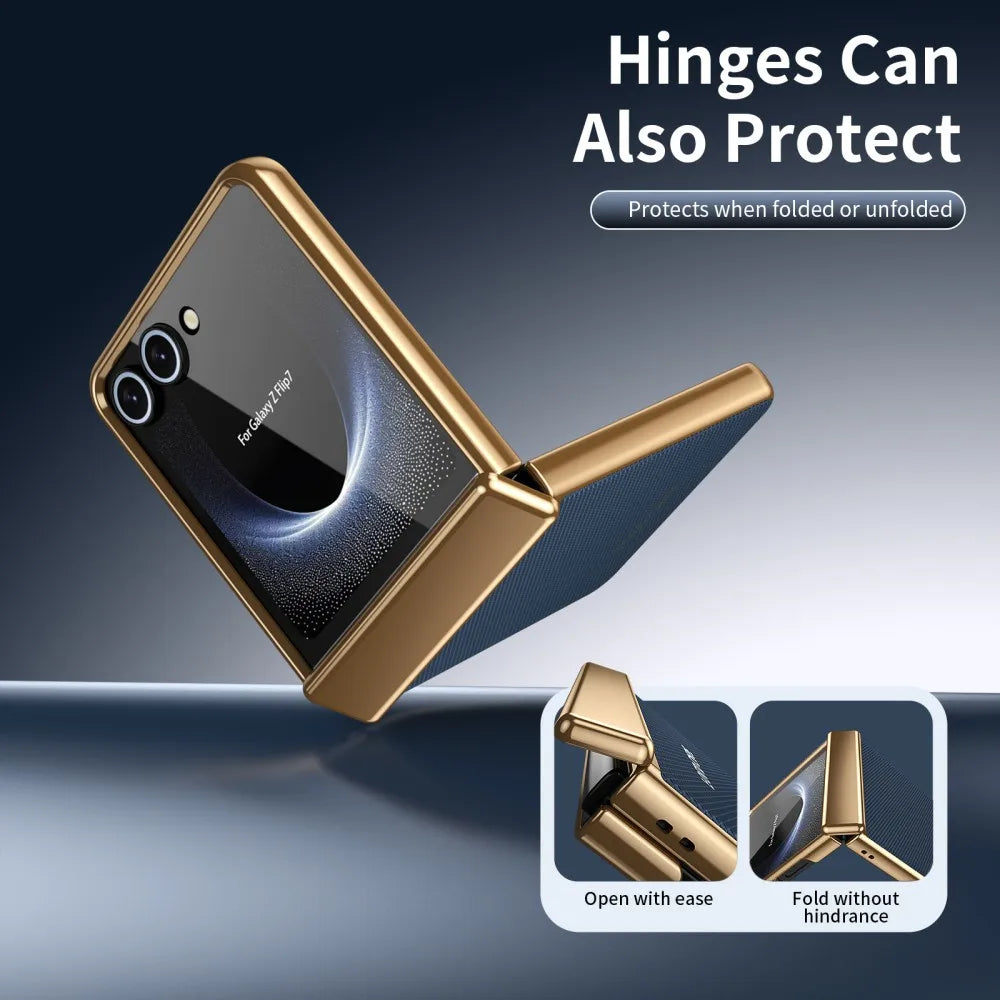
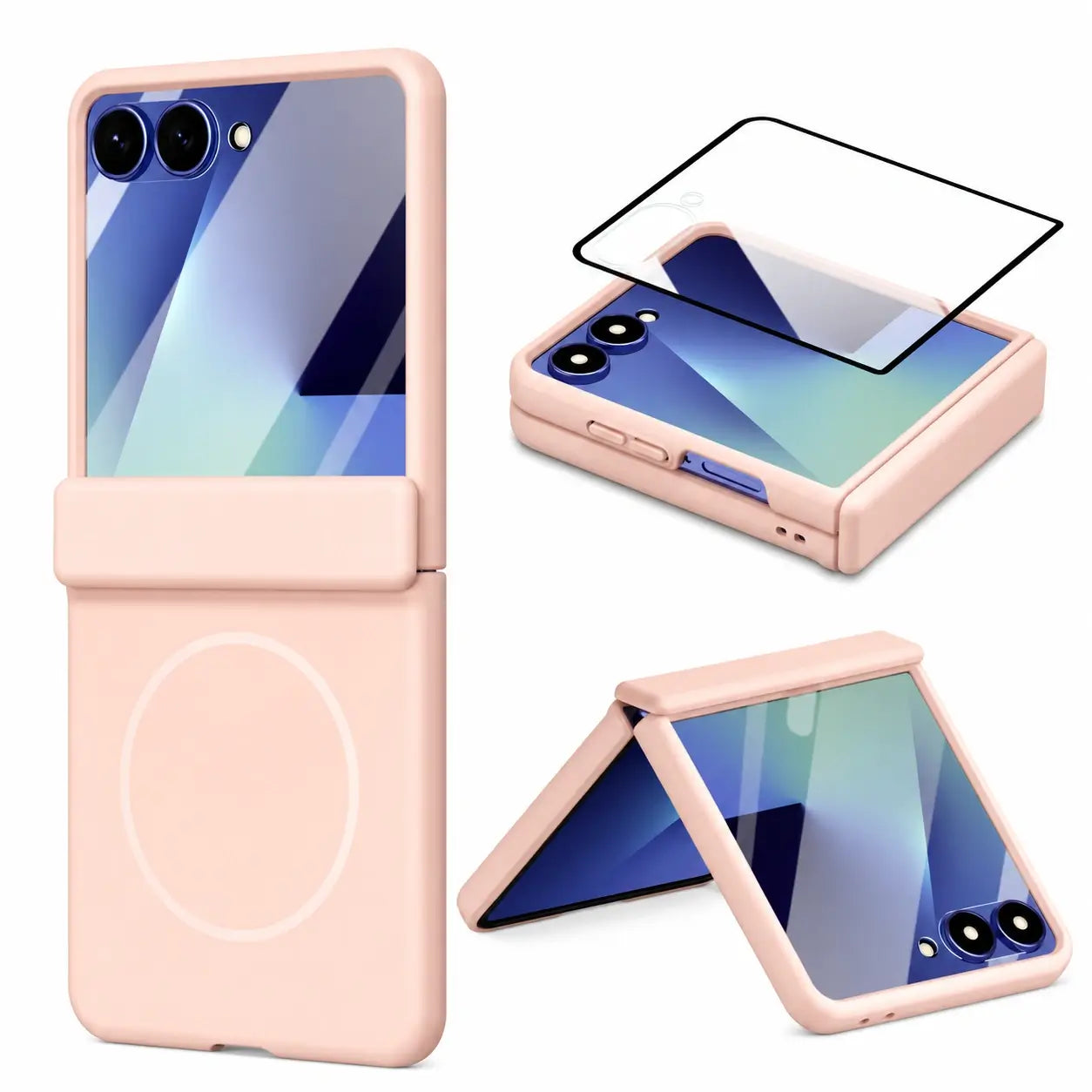
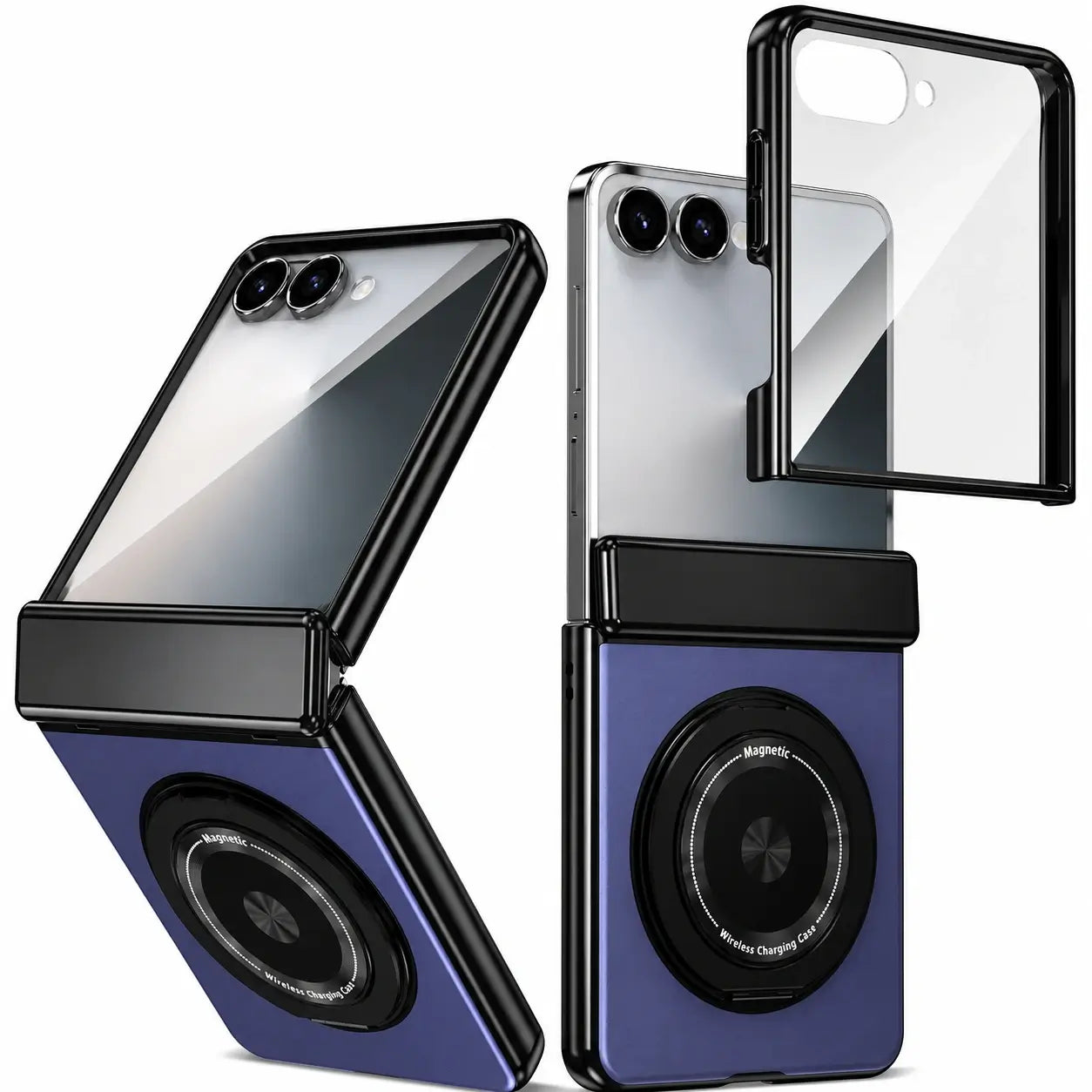
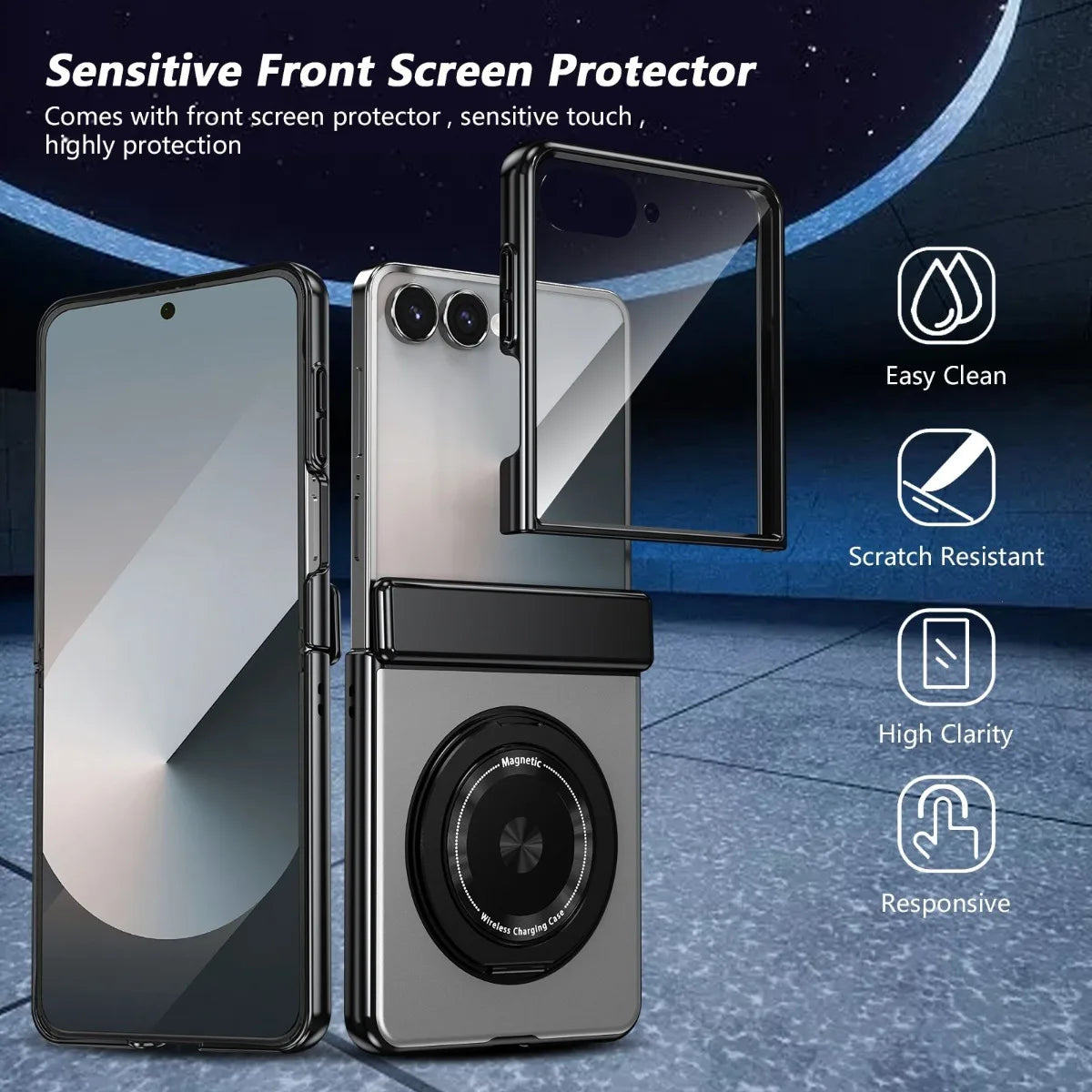
Whether you upgrade to Z Flip 8 or keep your Z Flip 7, the case requirement is the same: the Z Flip's FlexHinge is the most mechanically complex component on the device, and the inner display — UTG as it is — scratches more easily than standard smartphone glass. A case with hinge coverage physically seals the gap against debris intrusion. A MagSafe case adds the Qi2 magnetic snap that Samsung doesn't build in. A leather case matches the premium positioning of a $1,099 device.
OdinCase will have Z Flip 8 cases available on July 22, 2026 — the same day pre-orders open. MagSafe armor, leather, hinge protection, ring stand, wallet, clear, and slim matte — every category the Z Flip 7 collection offers, rebuilt for Z Flip 8 dimensions from day one. Free worldwide insured shipping on every order.

Leave a comment
This site is protected by hCaptcha and the hCaptcha Privacy Policy and Terms of Service apply.